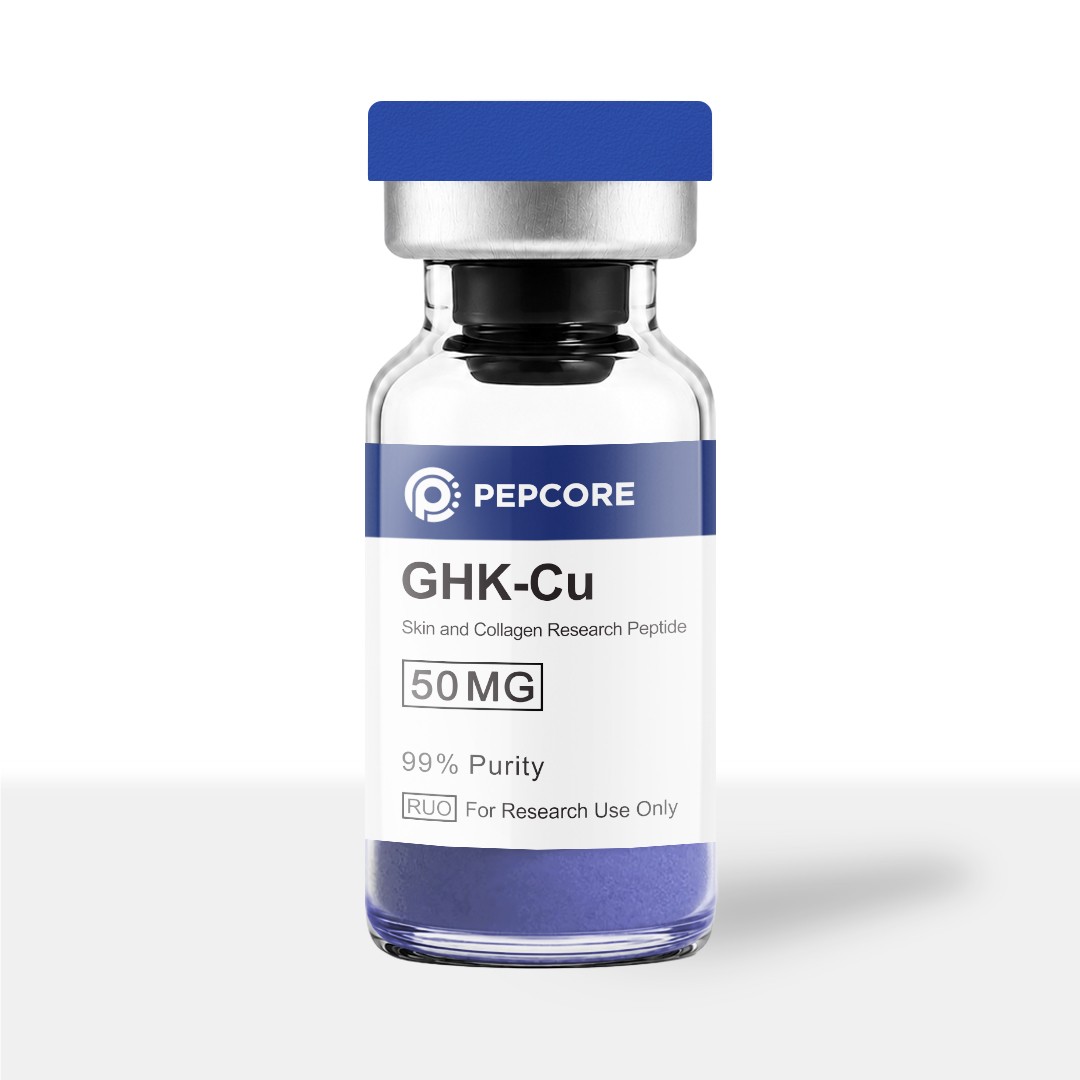
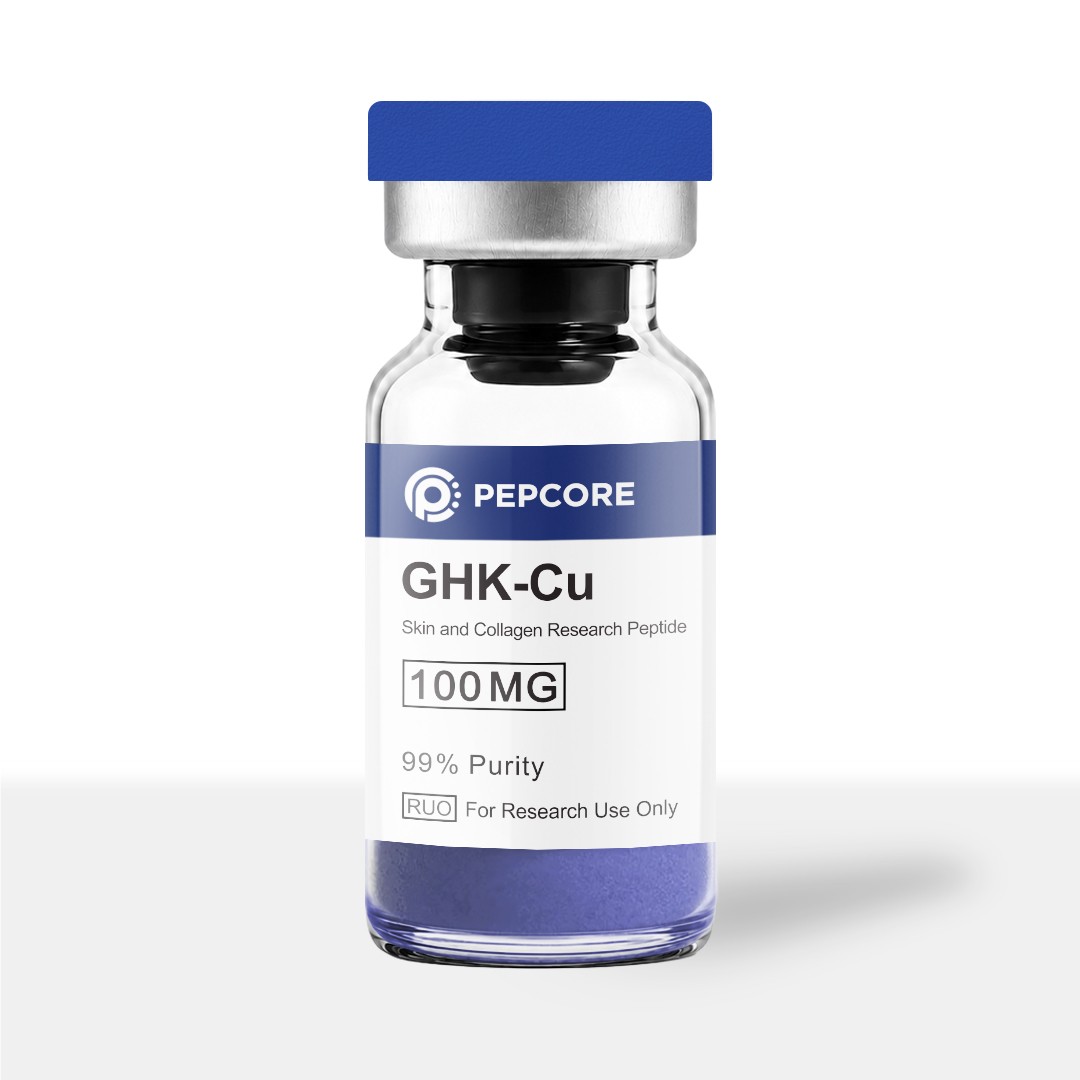
GHK-Cu is a copper-binding tripeptide made of three amino acids (glycine, histidine, and lysine). It’s best known for its role in skin, collagen, and tissue-repair research, and the copper it carries is what sets it apart from other peptides.
It also has a strong research base, with studies looking at how it interacts with cell signaling and the extracellular matrix (Pickart & Margolina, 2018). That’s why it shows up so often as a reference peptide in this kind of work.
Research Applications
- Collagen and connective-tissue research
- Cell-signaling and communication studies
- Copper-peptide and copper-binding research
- Cosmetic and skin-research models
Supplied as a lyophilized powder for stability.
See also: Epitalon, Snap-8, and MOTS-c.
Scientific Background
GHK was first identified in human plasma and later recognized for its strong affinity for copper ions. The GHK-Cu complex naturally occurs in tissues and fluids, where it participates in signaling pathways related to cellular-response research. Levels of GHK decline with age, which has led to scientific interest in its role in age-related loss of tissue cellular-pathway capacity.
Experimental studies have demonstrated that GHK-Cu can influence the expression of a wide range of genes involved in cell growth, antioxidant defense, inflammatory signaling control, and extracellular matrix organization. These properties have positioned GHK-Cu as an important research compound in studies of cellular-process signaling, skin aging, and connective tissue biology.
GHK-Cu Structure
Peptide Class: Copper-binding tripeptide
Amino Acid Sequence: Gly-His-Lys (GHK)
Molecular Formula: C₁₄H₂₃CuN₆O₄⁺
Molecular Weight: ~402.9 g/mol
CAS Number: 89030-95-5
Reviews
There are no reviews yet.