


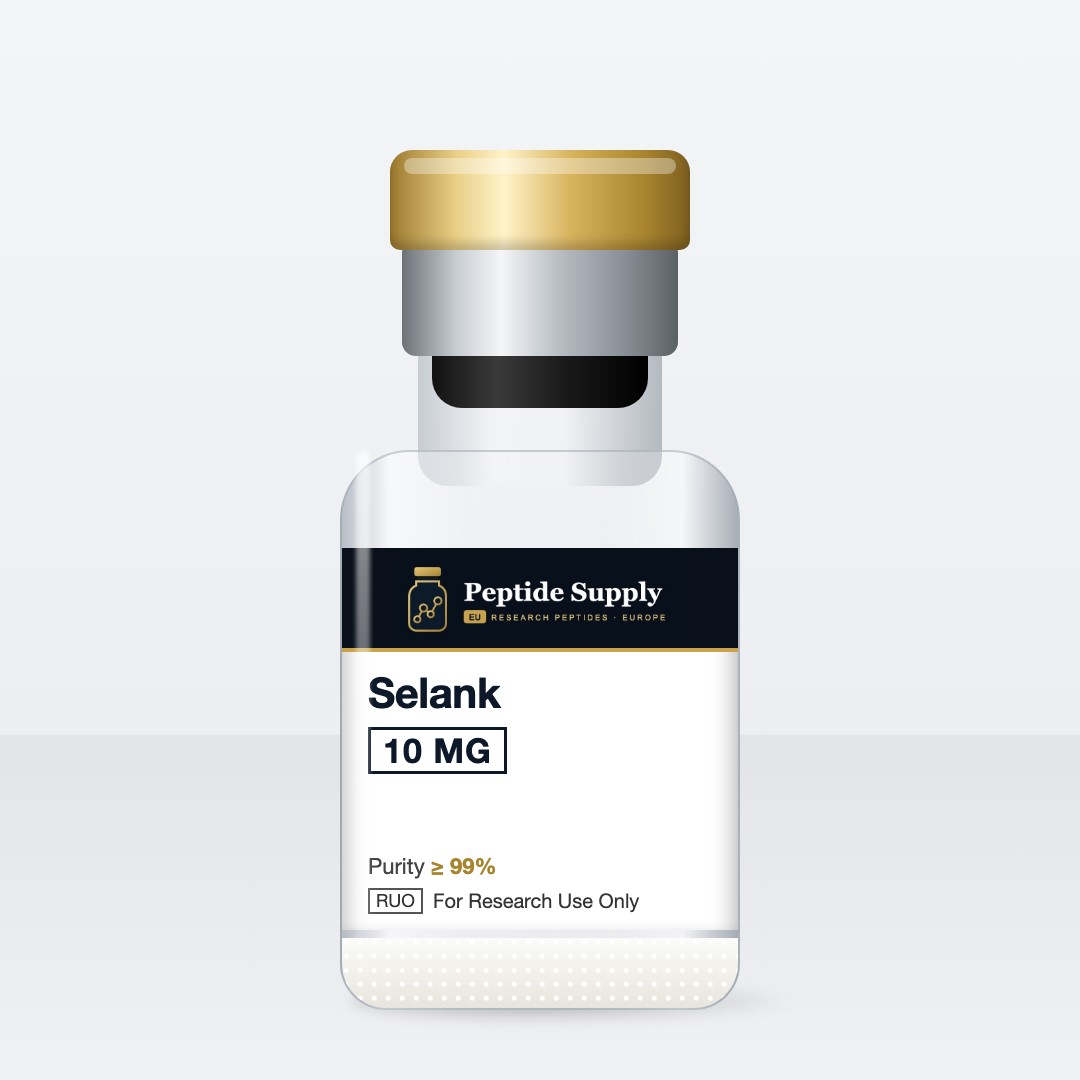
Selank is a synthetic heptapeptide, built from the natural immune-signaling peptide tuftsin with a short three-amino-acid tail added on. It is best known in research for its role in studies of neurotransmitter signaling, stress adaptation, and immune modulation.
It comes from work at the Russian Academy of Sciences and has a growing research base, with studies exploring how its tuftsin-based design shapes brain and immune signaling pathways.
Research Applications
- Neurotransmitter signaling research
- Stress adaptation studies
- Immune modulation research
- Tuftsin-derived peptide models
Supplied as a lyophilized powder for stability.
See also: Semax 10 mg, Adamax 10 mg, and Pinealon 20 mg.
Scientific Background
Neuropeptides play a critical role in regulating emotional behavior, stress adaptation, cognitive performance, and immune-neural interactions. Dysregulation of these systems is associated with adaptive-signalling dysregulation, cognitive decline, and stress-related immune imbalance.
Selank was developed as a synthetic peptide based on tuftsin-derived regulatory motifs, with the aim of studying long-term adaptive-signalling and cognitive effects without the limitations associated with traditional GABAergic or benzodiazepine-based compounds. This led to expanded research into its role in neuroadaptation, immune signaling, and stress resilience.
Experimental investigations have positioned Selank as a multifunctional research compound bridging central nervous system signaling and immune regulation, with documented influence on cytokine balance, neurotrophic factor expression, and gene transcription profiles in central nervous system tissue.
Selank Structure
Peptide Class: Tuftsin-derived synthetic heptapeptide
Amino Acid Sequence: Thr-Lys-Pro-Arg-Pro-Gly-Pro (TKPRPGP)
Molecular Formula: C₃₃H₅₇N₁₁O₉
Molecular Weight: 751.9 g/mol
CAS Number: 129954-34-3
PubChem CID: 11765600

Reviews
There are no reviews yet.